Silent Killer: Insufficient Project Management Process Maturity
In today’s competitive business environment, the difference between organizations that consistently deliver successful projects and those that struggle often comes down to their Project Management process maturity. Harold Kerzner’s Project Management Maturity Model (PMMM) provides a clear roadmap for small and medium-sized businesses to systematically improve their project management capabilities, leading to increased efficiency, reduced costs, and improved competitive positioning.
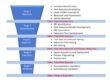
The PMMM framework identifies five progressive levels of organizational maturity, each building upon the previous. Understanding where your organization currently stands and what steps are needed to advance can transform project management from a source of frustration into a strategic advantage.
The Five Levels of Project Management Maturity
Level 1: Initial Process with Ad-hoc Activities
Characteristics: At this foundational level, organizations recognize the need for project management but lack formal processes. Projects succeed or fail primarily based on individual heroics rather than repeatable systems. Each project is approached differently, with minimal standardization or knowledge transfer between initiatives.
Business Impact: Inconsistent results, difficulty scaling operations, and high dependence on key individuals. Success is unpredictable and difficult to replicate.
Level 2: Structured Process with Standards
Characteristics: The organization develops and documents basic project management processes. Common terminology emerges, and teams begin using consistent planning templates and tools. However, these processes may still be applied inconsistently across different departments or projects.
Business Impact: Improved communication and coordination. Projects become more predictable, though execution still varies based on team composition and leadership commitment.
Level 3: Organizational Standards and Process
Characteristics: Project management becomes institutionalized across the organization. A single, integrated methodology is adopted company wide. The organization develops a Project Management Office (PMO) or similar coordinating function. Processes are documented, trained, and consistently followed.
Business Impact: Significant efficiency gains through standardization. Resources can move between projects with minimal ramp-up time. Management gains better visibility into project portfolios and can make more informed strategic decisions. AI initiatives can be reliably integrated.
Level 4: Managed and Controlled Process
Characteristics: The organization begins intensive benchmarking against industry standards and competitors. Processes are measured, controlled, and optimized based on quantitative data. The focus shifts from simply following processes to understanding and improving their effectiveness.
Business Impact: Projects consistently meet objectives for time, cost, and quality. The organization can accurately predict project outcomes and resource requirements. Competitive advantage begins to emerge from superior execution capabilities.
Level 5: Perfecting with Continuous Improvement
Characteristics: The organization achieves the highest level of maturity through continuous improvement and optimization. Lessons learned are systematically captured and integrated. Innovation in project management practices becomes part of the culture. The organization not only follows best practices but often creates them.
Business Impact: Sustained competitive advantage through operational excellence. The ability to tackle increasingly complex initiatives with confidence. Enhanced reputation in the marketplace as an organization that delivers on its commitments.
Key Insights for SMB Leaders
Maturity is a Journey, not a Destination. Organizations must progress through each level sequentially. Attempting to skip levels typically results in failure, as each stage builds essential capabilities required for the next. Most SMBs operate at Levels 1 or 2, presenting significant opportunity for competitive differentiation through systematic advancement.